

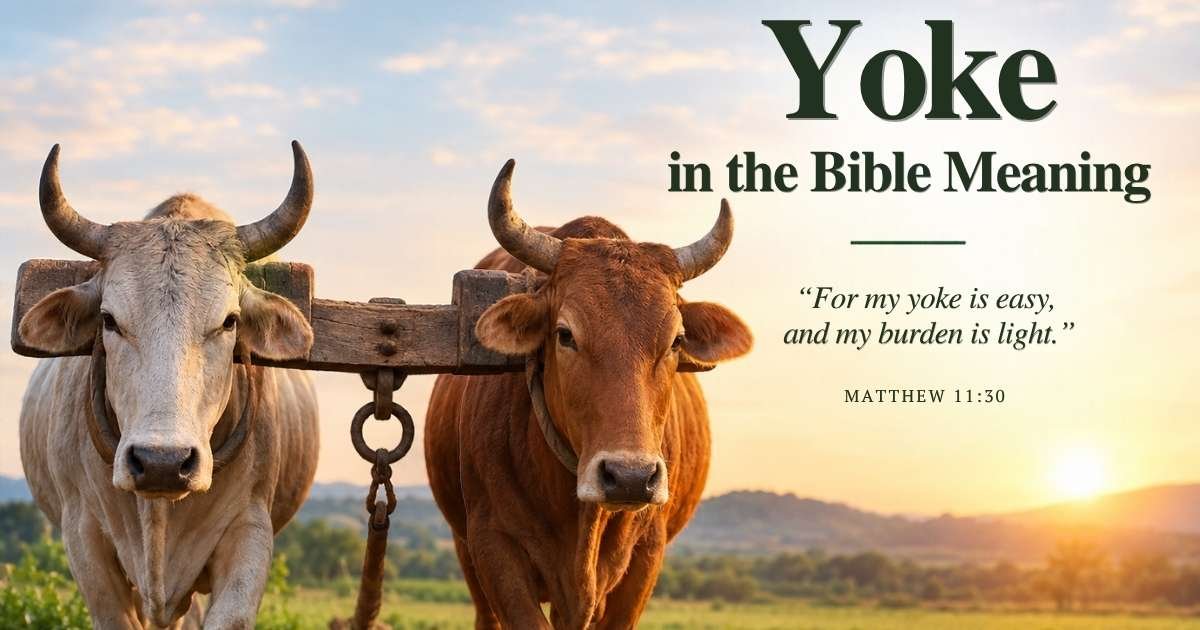
Have you ever read about a yoke in the Bible and wondered why this simple farming tool carries such a powerful spiritual message? In Scripture, a yoke can represent hardship, oppression, responsibility, obedience, and guidance. Its meaning depends on the passage in which it appears.
A yoke was traditionally a wooden frame placed around the necks of animals so they could work together and pull a plow or cart. Biblical writers used this familiar object to explain deeper lessons about authority, freedom, and faith. Jesus also used the image of a yoke to invite weary people to find rest in Him.
Understanding the biblical meaning of a yoke can help you appreciate its connection to everyday struggles, spiritual growth, and your relationship with God.
What Does Yoke Mean in the Bible?
In the Bible, a yoke is both a practical farming tool and a spiritual symbol. It can describe being controlled by another person, carrying a heavy burden, accepting responsibility, or following someone’s authority.
The meaning changes with the context. For example, a yoke placed on a nation may symbolize oppression, while Jesus’ invitation to take His yoke represents learning from Him and living according to His teachings.
1. Yoke as a Symbol of Burden
A yoke frequently represents hardship, forced labor, or an oppressive situation. In biblical times, people understood how difficult life could become under the control of a powerful ruler. Scripture sometimes describes this experience as being placed under a yoke.
In Jeremiah 28:10–11, the prophet Hananiah breaks the wooden yoke Jeremiah is wearing as a symbolic act connected to his prophecy about Babylonian rule. The scene illustrates how a physical object could communicate a message about political power and oppression.
In everyday life, people may use the idea of a burden to describe financial pressure, family responsibilities, or difficult circumstances. Although these experiences are not identical to biblical slavery or oppression, the image of a yoke can help readers reflect on situations that feel restrictive or exhausting.
Also read: Who Is Mazikeen in the Bible: What Spirit Is Really Behind Her?
2. Jesus’ Yoke
One of the best-known references appears in Matthew 11:28–30. Jesus invites those who are weary and burdened to come to Him, promising rest for their souls.
He says, “For my yoke is easy, and my burden is light” (Matthew 11:30, KJV).
Jesus is not promising that following Him will remove every problem. Instead, He offers a different way of living—one shaped by His character, teaching, and guidance. Rather than struggling under crushing expectations, His followers can learn from someone who describes Himself as gentle and humble in heart.
For Christians, taking Jesus’ yoke means trusting Him, learning His ways, and following Him through both peaceful and difficult seasons.
3. Yoke as Submission
A yoke can also represent submission to authority. Just as an animal works under the direction of its handler, the biblical image can describe living under a ruler’s control or accepting a particular form of spiritual commitment.
In a Christian context, submitting to God means seeking His wisdom and allowing Scripture to shape your decisions. It does not mean that you should accept abuse or harmful treatment from other people. Faithful obedience to God should not be confused with giving another person unlimited control over your life.
The central lesson is to consider whose guidance you follow and whether that influence leads toward faithfulness, wisdom, and love.
Biblical Meaning of Yoke
The biblical meaning of a yoke cannot be reduced to a single definition. Its symbolism depends on whether the passage describes oppression, spiritual instruction, or a relationship between people.
A Symbol of Burden or Oppression
In Lamentations 1:14, a yoke is associated with the consequences of wrongdoing and suffering. Elsewhere, Scripture uses the image to describe the hardships experienced under oppressive rulers.
These passages show that a yoke can represent a situation in which freedom is restricted and responsibilities become overwhelming. They also encourage readers to consider the difference between healthy responsibility and unfair control.
A Symbol of Submission and Guidance
Jesus gives the image a different emphasis in Matthew 11:28–30. His yoke represents discipleship: learning from Him and accepting His teaching.
This image reminds believers that spiritual growth involves direction and commitment. Faith is not simply about asking God to solve every difficulty; it also involves developing patience, practicing compassion, and making choices that reflect Christian values.
Partnership and Unity
A yoke connects animals so they can perform work together. This practical purpose makes it a useful image of cooperation and shared responsibility.
In a spiritual sense, believers may understand this image as an encouragement to depend on God and support others. Galatians 6:2 instructs Christians to bear one another’s burdens, emphasizing the importance of compassion and community.
However, not every biblical reference to a yoke describes a positive partnership. The surrounding passage determines whether the image communicates cooperation or oppression.
Emotional Takeaway
The image of a yoke can encourage you to examine what you are carrying. Are your responsibilities manageable, or are you trying to handle everything without support? Are you following wise guidance, or allowing unhealthy expectations to control your choices?
These questions can help you reflect on your spiritual and emotional life. The biblical message is not that every burden will disappear immediately, but that faith, wisdom, and supportive relationships can help you face difficulties with greater hope.
Yoke in the Bible Meaning: Spiritual Significance and Symbolism
The spiritual significance of a yoke includes several important lessons for Christian life.
Humility: Jesus describes Himself as gentle and humble in heart in Matthew 11:29. His example encourages believers to approach others with patience rather than pride.
Trust in God: A yoke can remind Christians that they do not need to rely entirely on their own strength. Prayer and reflection can help them seek God’s wisdom during uncertain times.
Freedom from oppression: In Isaiah 10:27, the imagery of a yoke being broken communicates liberation from an oppressive power. The passage belongs to a specific prophetic context, but its imagery can remind readers of the biblical theme of deliverance.
Responsibility and obedience: Following Christ involves commitment. His invitation is not a call to avoid responsibility but to learn a way of life shaped by His teaching.
Community: The image of shared work can also encourage believers to offer practical help, listen without judgment, and support people facing difficult circumstances.
Together, these themes show that a yoke may symbolize either a heavy burden or a meaningful commitment, depending on the biblical context.
Yoke in the Bible Meaning: Biblical Interpretations in Dreams or Real Life
Some people encounter a yoke in a dream and wonder whether it carries a spiritual message. A dream involving a yoke might prompt reflection on responsibility, relationships, personal pressure, or the desire for guidance.
However, the Bible does not provide a universal interpretation for every possible dream involving a yoke. It would be misleading to claim that a particular dream automatically predicts an event or proves that God is sending a specific message.
Consider the details and your circumstances instead.
- A heavy yoke: You might reflect on responsibilities or pressures that feel difficult to manage.
- A broken yoke: It may bring to mind freedom, relief, or the hope of overcoming a difficult situation.
- Two animals working together: This image may encourage reflection on cooperation, trust, and shared responsibilities.
- A yoke that feels comfortable: You might consider whether a commitment or source of guidance is helping you live with greater purpose.
These are reflective possibilities, not guaranteed biblical meanings. If a dream concerns an important decision, prayer, careful thought, and advice from a trusted spiritual leader may be more helpful than relying on dream symbolism alone.
Practical Lessons & Faith Insights
The biblical image of a yoke offers several practical lessons you can apply to daily life.
- Bring your worries to God. Prayer can help you express your concerns honestly and seek strength when circumstances feel overwhelming.
- Learn from Jesus’ example. Practice humility, patience, kindness, and forgiveness in your relationships.
- Recognize unhealthy burdens. Not every demand placed on you is fair or necessary. Seek wise support when responsibilities become unmanageable.
- Accept help from others. Sharing difficulties with trusted friends, family members, or fellow believers can make challenging seasons easier to navigate.
- Examine your commitments. Consider whether your daily choices reflect your values and faith. Make thoughtful changes when you recognize a harmful pattern.
- Read Scripture in context. Compare passages such as Matthew 11:28–30, Jeremiah 28:10–11, and Galatians 6:2 to understand how biblical imagery changes according to its purpose.
These practices can help turn the symbolism of a yoke into meaningful reflection rather than simply an interesting biblical detail.
Conclusion:
The yoke in the Bible meaning centers on several connected ideas: burden, oppression, responsibility, submission, guidance, and partnership. Its significance depends on the passage, so it can represent both the hardship of being controlled and the commitment of following a wise teacher.
Jesus’ invitation in Matthew 11:28–30 offers one of the clearest messages of comfort. He calls weary people to come to Him, learn from His example, and find rest for their souls.
If life feels heavy, this passage can remind you to seek God’s guidance, examine the burdens you carry, and accept support from trustworthy people. A yoke does not always symbolize suffering; in Jesus’ teaching, it also represents a way of living grounded in humility, trust, and spiritual rest.

Kai Rowan is a passionate content creator and the visionary behind a growing platform dedicated to the blessings niche. With a deep appreciation for positivity, gratitude, and spiritual inspiration, Kai curates meaningful content that uplifts and connects readers worldwide.